what if i told you that a lot of “Americanized” versions of foods were actually the product of immigrant experiences and are not “bastardized versions”
That’s actually fascinating, does anyone have any examples?
I took an entire class about Italian American immigrant cuisine and how it’s a product of their unique immigrant experience. The TL;DR is that many Italian immigrants came from the south (the poor) part of Italy, and were used to a mostly vegetable-based diet. However, when they came to the US they found foods that rich northern Italians were depicted as eating, such as sugar, coffee, wine, and meat, available for prices they could afford for the very first time. This is why Italian Americans were the first to combine meatballs with pasta, and why a lot of Italian American food is sugary and/or fattening. Italian American cuisine is a celebration of Italian immigrants’ newfound access to foods they hadn’t been able to access back home.
(Source: Cinotto, Simone. The Italian American Table: Food, Family, and
Community in New York City. Chicago: U of Illinois, 2013. Print.)
that corned beef and cabbage thing you hear abou irish americans is actually from a similar situation but because they weren’t allowed to eat that stuff due to that artificial famine
❤ FOOD HISTORY ❤
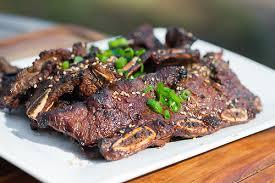
Everyone knows Korean barbecue, right? It looks like this, right?
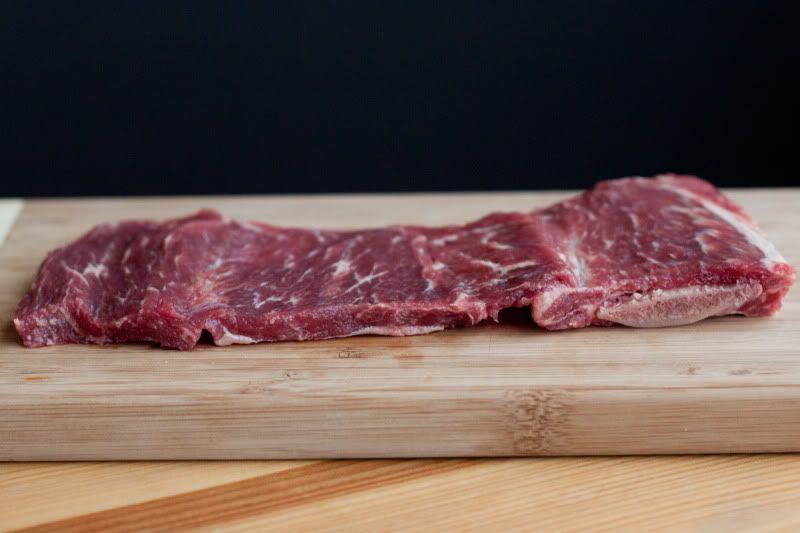
Well, this is called a “flanken cut” and was actually unheard of in traditional Korean cooking. In traditional galbi, the bone is cut about two inches long, separated into individual bones, and the meat is butterflied into a long, thin ribbon, like this:
In fact, the style of galbi with the bones cut short across the length is called “LA Galbi,” as in “Los Angeles-style.” So the “traditional Korean barbecue” is actually a Korean-American dish.
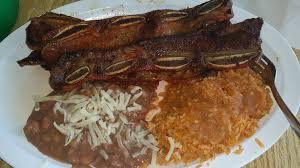
Now, here’s where things get interesting. You see, flanken-cut ribs aren’t actually all that popular in American cooking either. Where they are often used however, is in Mexican cooking, for tablitas.
So you have to imagine these Korean-American immigrants in 1970s Los Angeles getting a hankering for their traditional barbecue. Perhaps they end up going to a corner butcher shop to buy short ribs. Perhaps that butcher shop is owned by a Mexican family. Perhaps they end up buying flanken-cut short ribs for tablitas because that’s what’s available. Perhaps they get slightly weirded out by the way the bones are cut so short, but give it a chance anyway. “Holy crap this is delicious, and you can use the bones as a little handle too, so now galbi is finger food!” Soon, they actually come to prefer the flanken cut over the traditional cut: it’s easier to cook, easier to serve, and delicious, to boot!
Time goes on, Asian fusion becomes popular, and suddenly the flanken cut short rib becomes better known as “Korean BBQ,” when it actually originated as a Korean-Mexican fusion dish!
I don’t know that it actually happened this way, but I like to think it did.
Corned beef and cabbage as we know it today? That came to the Irish immigrants via their Jewish neighbors at kosher delis.
The Irish immigrants almost solely bought their meat from kosher butchers. And what we think of today as Irish corned beef is actually Jewish corned beef thrown into a pot with cabbage and potatoes. The Jewish population in New York City at the time were relatively new immigrants from Eastern and Central Europe. The corned beef they made was from brisket, a kosher cut of meat from the front of the cow. Since brisket is a tougher cut, the salting and cooking processes transformed the meat into the extremely tender, flavorful corned beef we know of today.
The Irish may have been drawn to settling near Jewish neighborhoods and shopping at Jewish butchers because their cultures had many parallels. Both groups were scattered across the globe to escape oppression, had a sacred lost homeland, discriminated against in the US, and had a love for the arts. There was an understanding between the two groups, which was a comfort to the newly arriving immigrants. This relationship can be seen in Irish, Irish-American and Jewish-American folklore. It is not a coincidence that James Joyce made the main character of his masterpiece Ulysses, Leopold Bloom, a man born to Jewish and Irish parents.
A loaf of bread made in the first century AD, which was discovered at Pompeii, preserved for centuries in the volcanic ashes of Mount Vesuvius. The markings visible on the top are made from a Roman bread stamp, which bakeries were required to use in order to mark the source of the loaves, and to prevent fraud. (via Ridiculously Interesting)
(sigh) I’ve seen these before, but this one’s particularly beautiful.
I feel like I’m supposed to be marveling over the fact that this is a loaf of bread that’s been preserved for thousands of years, and don’t get me wrong, that’s hella cool. But honestly, I’m mostly struck by the unexpected news that “bread fraud” was apparently once a serious concern.
Bread Fraud was a huge thing, Bread was provided to the Roman people by the government – bakers were given grain to make the free bread, but some of them stole the government grain to use in other baked goods and would add various substitutes, like sawdust or even worse things, to the bread instead. So if people complained that their free bread was not proper bread, the stamp told them exactly whose bakery they ought to burn down.
Bread stamps continued to be used at least until the Medieval period in Europe. Any commercially sold bread had to be stamped with an official seal to identify the baker to show that it complied with all rules and regulations about size, price, and quality. This way, rotten or undersized loaves could be traced back to the baker. Bakers could be pilloried, sent down the streets in a hurdle cart with the offending loaf tied around their neck, fined, or forbidden to engage in baking commercially ever again in that city. There are records of a baker in London being sent on a hurdle cart because he used an iron rod to increase the weight of his loaves, and another who wrapped rotten dough with fresh who was pilloried. Any baker hurdled three times had to move to a new city if they wanted to continue baking.
If you have made bread, you are probably familiar with a molding board. It’s a flat board used to shape the bread. Clever fraudsters came up with a molding board that had a little hole drilled into it that wasn’t easily noticed. A customer would buy his dough by weight, and then the baker would force some of that dough through the hole, so they could sell and underweight loaf and use the stolen dough to bake new loafs to sell. Molding boards ended up being banned in London after nine different bakers were caught doing this. There were also instances of grain sellers withholding grain to create an artificial scarcity drive up the price of that, and things like bread.
Bread, being one of the main things that literally everyone ate in many parts of the world, ended up with a plethora of rules and regulations. Bakers were probably no more likely to commit fraud than anyone else, but there were so many of them, that we ended up with lots and lots of rules and records of people being shifty.
Check out Fabulous Feasts: Medieval Cookery and Ceremony by Madeleine Pelner Cosman for a whole chapter on food laws as they existed in about 1400. Plus the color plates are fantastic.
ALL OF THIS IS SO COOL
I found something too awesome not share with you!
I’m completely fascinated by the history of food, could I choose a similar topic for my Third Year Dissertation? Who knows, but it is very interesting all the same!
Bread fraud us actually where the concept of a bakers dozen came from. Undersized rolls/loaves/whatever were added to the dozen purchased to ensure that the total weight evened out so the baker couldn’t be punished for shorting someone.
[wants to talk about bread fraud laws and punishments]
I just discovered foodtimeline.org, which is exactly what it sounds like: centuries worth of information about FOOD. If you are writing something historical and you want a starting point for figuring out what people should be eating, this might be a good place?
CHRISTMAS CAME EARLY
this is awesome but the original link just turned into a redirect loop for me, here it is again (x)


 Plot Designing