Legolas pretty quickly gets in the habit of venting about his travelling companions in Elvish, so long as Gandalf & Aragorn aren’t in earshot they’ll never know right?
Then about a week into their journey like
Legolas: *in Elvish, for approximately the 20th time* ugh fucking hobbits, so annoying
Frodo: *also in Elvish, deadpan* yeah we’re the worst
Legolas:
~*~earlier~*~
Legolas: ugh fucking hobbits
Merry: Frodo what’d he say
Frodo: I’m not sure he speaks a weird dialect but I think he’s insulting us. I should tell him I can understand Elvish
i mean, honestly it’s amazing the Elves had as many languages and dialects as they did, considering Galadriel (for example) is over seven thousand years old.
english would probably have changed less since Chaucer’s time, if a lot of our cultural leaders from the thirteenth century were still alive and running things.
they’ve had like. seven generations since the sun happened, max.
frodo’s books are old to him, but outside any very old poetry copied down exactly, the dialect represented in them isn’t likely to be older than the Second Age, wherein Aragorn’s foster-father Elrond started out as a very young adult and grew into himself, and Legolas’ father was born.
so like, three to six thousand years old, maybe, which is probably a drop in the bucket of Elvish history judging by all the ethnic differentiation that had time to develop before Ungoliant came along, even if we can’t really tell because there weren’t years to count, before the Trees were destroyed.
plus a lot of Bilbo’s materials were probably directly from Elrond, whose library dates largely from the Third Age, probably, because he didn’t establish Imladris until after the Last Alliance. and Elrond isn’t the type to intentionally help Bilbo learn the wrong dialect and sound sillier than can be helped, even if everyone was humoring him more than a little.
so Frodo might sound hilariously formal for conversational use (though considering how most Elves use Westron he’s probably safe there) and kind of old-fashioned, but he’s not in any danger of being incomprehensible, because elves live on such a ridiculous timescale.
to over-analyse this awesome and hilarious post even more, legolas’ grandfather
was from linguistically stubborn Doriath and their family is actually from a
somewhat different, higher-status ethnic background than their subjects.
so depending on how much of a role Thranduil took in his
upbringing (and Oropher in his), Legolas may have some weird stilted old-fashioned speaking tics in his
Sindarin that reflect a more purely Doriathrin dialect rather than the Doriathrin-influenced Western Sindarin that became the most widely spoken Sindarin long before he was born, or he might have a School Voice
from having been taught how to Speak Proper and then lapse into really
obscure colloquial Avari dialect when he’s being casual. or both!
considering legolas’ moderately complicated political position, i expect he can code-switch.
…it’s
also fairly likely considering the linguistic politics involved that Legolas is reasonably articulate in Sindarin, though
with some level of accent, but knows approximately zero Quenya outside of loanwords into Sindarin, and even those he mostly didn’t learn as a kid.
which would be extra hilarious when he and gimli fetch up in Valinor in his little homemade skiff, if the first elves he meets have never been to Middle Earth and they’re just standing there on the beach reduced to miming about what is the short beard person, and who are you, and why.
this is elvish dialects and tolkien, okay. there’s a lot of canon material! he actually initially developed the history of middle-earth specifically to ground the linguistic development of the various Elvish languages!
Legolas: Alas, verily would I have dispatched thine enemy posthaste, but y’all’d’ve pitched a feckin’ fit.
Aragorn: *eyelid twitching*
Frodo: *frantically scribbling* Hang on which language are you even speaking right now
Pippin, confused: Is he not speaking Elvish?
Frodo, sarcastically: I dunno, are you speaking Hobbit?
Boromir, who has been lowkey pissed-off at the Hobbits’ weird dialect this whole time: That’s what it sounds like to me.
Merry, who actually knows some shit about Hobbit background: We are actually speaking multiple variants of the Shire dialect of Westron, you ignorant fuck.
Sam, a mere working-class country boy: Honestly y’all could be talkin Dwarvish half the time for all I know.
Pippin, entering Gondor and speaking to the castle steward: hey yo my man
Boromir, from beyond the grave: j e s u s
Literally canon
TIL Tumblr can out-language-geek Tolkein and honestly that’s why I love this site so much.
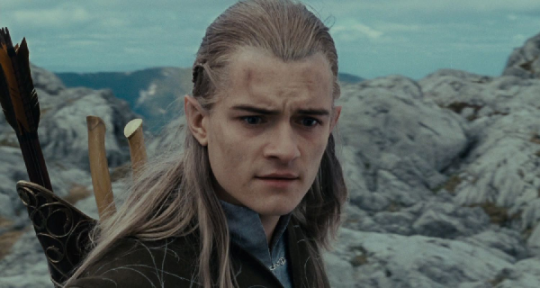
OK…. here it is.. my fellowship designs…. i hope they’re not dissapointing to everyone who was waiting for them i’m so nervous…. (some commentary if u click the portraits),. also its big so… id recommend CLICKIN+ZOOM IF U WANT THE FULL PIC….
I think I realized why Sauron works as a villain, at least for me.
Sauron is often seen as the prototypical example of the Dark Lord, the excruciatingly boring stock villain of classic high fantasy. He’s the dark component of a reductive black-and-white morality. He sits in a tower and wants to conquer and/or destroy everything. His tools, his servants, his lands are all foul, ugly, barren and evil. No real motivation, no personality to speak of. (Especially in contrast to the secondary villains and anti-villains in LOTR, who all have their stories and all but overflow with personality.)
Real Tolkien buffs, the ones who are buffer than me, will tell you that Sauron has an incredibly complex backstory, mostly contained in the Silmarillion, with bits and pieces all over Tolkien’s writings. Sauron has led a long and complicated life, going by various names and identities, serving evils greater than himself, getting destroyed but surviving multiple times, doing evil, repenting, faking repentance, doing evil again, going native in various ancient civilizations then contributing to their destruction, etc. If you read all the supplementary material, piece it together and fill the gaps with your imagination, Sauron is a noble, interesting, complex villain.
Very little of that comes through in LOTR itself, but I think it doesn’t need to. I think Sauron functions as a fantastic villain in LOTR exactly because we know so very little about him. Sauron has no POV chapter, except for a few paragraphs, and no POV characters ever encounter Sauron in a direct and comprehensible way. He mostly acts through proxy, his captains make war for him, his proxies speak for him. The reader never feels that his characterization is insufficient, because he *has no characterization*, he’s too far away and too high up, unknowable. Mostly Sauron is spoken of in the abstract, as the ‘enemy’, as the cause of evil, not as a specific evil person to be defeated. After all, it’s pretty clear he cannot be defeated, not in person. And when someone has a real and somewhat more direct encounter with Sauron, either via a palantír or in a vision, Sauron is too powerful to register as an individual person: he is an eye, a flame, a force, a will, a seeking attention. He is too big and too close to see as a whole, he is in your head, intruding, terrible.
So the narrative places Sauron in a context where he is either a distant menace, or an immense, incomprehensible mindfuck. Although he feels emotions such as wrath or fear, and he makes cunning stratagems, he doesn’t read as a strong clever evil person, he mostly reads as a force, as sheer power that only seeks more power. And on the whole, I feel that he *is* just that: not a person, but a power-hunger itself. It is stated in text that he’s a diminished, weakened, wounded version of himself, that during his different attempts (and failures) to subjugate others, he kept losing parts of himself, first his ability to assume a pleasing form, then to embody himself at all. I get the implication that he used to be a complicated entire whole person, and his struggle for power slowly eroded him, sanding off quirks and traits and individuality, costing him his patience for beautiful craft and his interest in beautiful languages, until he could no longer even pretend to be a fellow-person and not a *power*. Until he became an creature made of, and by, his own power. He was a person but power ate him and now he’s gone: this is the threat and the lure of the ring, which Sauron made of, and for, himself. Interactions with the ring are the closest thing we come to genuine interactions with Sauron, or to insights into Sauron’s mind – and interactions with the ring are uniformly horrifying, except maybe the one time Sam is small enough and kind enough to laugh it off. And seeing that, it’s clear that the ring needs to be destroyed, and Sauron’s power needs to be destroyed, for Sauron’s sake too. Only when he’s cut off from his power can his lost houseless spirit find its way through, to redemption or even just to rest.
TLDR: I don’t usually dislike villains who seem to seek power for power’s sake, but Sauron feels like a fantastic deconstruction of that: after all, LOTR is mostly about the risk of individual people becoming corrupted by power and becoming the vehicle of mere power-seeking-power-for-power’s-sake, and Sauron is someone to whom that already happened.
I swear, the dumbest things get crossover AUs stuck in my head.
Okay, so in Undertale, Asgore’s battle anthem is called “Bergentrückung“. This is the German name for a folkloric trope whereby a great hero is laid to rest in an enchanted sleep, typically within a mountain tomb, awaiting the day of his people’s greatest peril, whereupon he will rise again. In English, this trope is usually known as the king in (or under) the mountain.
In The Hobbit, Thorin Oakenshield’s title is “The King Under the Mountain”. Like many of Tolkien’s titles, this has a double meaning: it’s both a literal reference to the fact that he’s king-in-exile of a domain that lies under a mountain, and an allusion to the aforementioned trope, poetically framing him as a “sleeping king” who will one day rise from death (i.e., return from exile) to save his people.
That got me to thinking: Bilbo’s theft of the Arkenstone represents a failed attempt to broker peace between Thorin’s people and the people of Laketown, just as – in Undertale’s normal route – Frisk’s confrontation with Asgore reflects an ultimately futile effort to put an end to human/monster violence. In both cases, the motif is the same: in order to bring about peace, the king under the mountain must die.
Of course, in Undertale, that end can be averted, albeit only by literally breaking reality. But now that parallel is stuck in my head, and I can’t decide what would be more hilariously wrong:
Bilbo Baggins doing a True Pacifist run of The Hobbit?
Or Bilbo Baggins doing a No Mercy run of The Hobbit?
Yeah, roll that one around in your head a bit.
I can totally picture how the climactic confrontation of an Undertale style No Mercy route would go, too.
Most of the game would keep Bilbo as a member of Thorin’s party, as he is in the source material, while carefully arranging for all the horrible No-Mercy-route stuff you do to happen out of sight of most of the dwarves. (This isn’t difficult to manage, as Bilbo’s role gives him regular excuses to go on solo missions.) The other dwarves would frequently remark on Bilbo being a creepy little guy, but whatever – he gets results, right?
Meanwhile, in your interactions with Thorin, you’d deliberately enable his bloodthirstiness and paranoia, encouraging him to resort to increasingly extreme measures in pursuit of his goals, especially as his companions start to die off (not that you have anything to do with that, right?). Eventually, you’d reach a breaking point where he realises that a. he’s betrayed everything he stood for in a mad quest for gold and vengeance, and b. Bilbo himself is the one who’s responsible for his friends’ deaths.
And there’s your final battle: freaky little hobbit with the power of Ultimate Evil in his pocket versus a repentant and grief-maddened Thorin Oakenshield. If you wanted to really drive the point home, instead of having him dodge or parry all of Bilbo’s attacks, you might give him a big wooden shield that cracks a little more with each attack, until you finally shatter it to deal the killing blow.
where does gandalf fit in in all of thise
I figure Gandalf is the game’s other major boss fight – basically your Undyne analogue. Naturally, No Mercy Bilbo can’t defeat him for good, but he manages to tap just enough of the Ring’s power to cloud Gandalf’s mind as he goes in for the killing blow; by the time Gandalf’s mortal form reincarnates, it’s too late for him to stop anything that follows. This all happens out of sight of the party, so from the dwarves’ perspective, Gandalf goes off on one of his mysterious errands and simply never comes back – just like he nearly did in the book.
And I’m guessing the pacifist route isn’t Tolkien’s canon but an AU where Bilbo befriends the Goblin King, spiders, Smaug, Bolg, and the Necromancer?
Bilbo definitely explicitly took the Mercy option with Gollum. But maybe in Pacifist, Gollum reappears later?
Totally.
Like I said in the initial post, the canonical story of The Hobbit is clearly the normal route for the same reason as Undertale’s normal route: ultimately, the protagonist is unable to find a peaceful resolution, a great battle is fought, and the king under the mountain dies.
Our hypothetical True Pacifist run of The Hobbit basically spins off into a massively divergent AU where Sauron’s ambitions are pacified through the power of friendship, and the events of The Lord of the Rings never happen. This doesn’t necessarily mean that Sauron is actually redeemed – remember that even in Undertale’s True Pacifist route, Frisk can’t save Asriel from his fate – but he’s at least taken off the board as an immediate threat.
I have absolutely no idea how all that could possibly happen, mind, but it’s the way it would have to go.
Am I the only person who thought this was really fucking funny
A lot of the really funny moments in Lord of the Rings come from Tolkien playing with language like this, where we have relatively formal, archaic, “high” language responded to with informal, modern, “low” language.
What do we know about Tom Bombadil? He is fat and jolly and smiles all the time. He is friendly and gregarious and always ready to help travellers in distress.
NO and also ME AND MOM HAVE BEEN SAYING THERE IS SOMETHING UP WITH TOM BOMBADIL and THIS IS WHY
I like the idea, because I love Tom Bombadil. Personally I think I’ll stick with Bombadil as Tolkien intended: He is England, the genius loci of a nation, placed in Middle Earth as ecological and spiritual touchstone. (He is also, weirdly, the embodiment of science, but it makes sense in context.)
Tolkien wrote on the deliberate status of Bombadil, one of his oldest OCs, as an obscurity – a necessary mystery. In his guise as a pre-LOTR OC, Bombadil is explicitly a manifestation of the vanishing chalk downland of England (which is one of the big eco-spiritual themes of Lord of the Rings). And if we refer back to Elodie’s Puck Rant, we see the connections between Tom Bombadil and Puck of Puck of Pook’s Hill – the Oldest Old Thing in England – a breaker of narrative and agent of chaos.
“Do you think Tom Bombadil, the spirit of the (vanishing) Oxford and Berkshire countryside, could be made into the hero of a story?” Tolkien wrote to Stanley Unwin in 1937, about his favorite OC, before his more famous works.
He is fundamentally neutral, and unconcerned with the strivings of men, wars and modern gods. He is The Land, married to The River – this is a recurring theme in literature from the British Isles, this concept of the anthropomorphic personification of The Beloved Land ™, a descendant of the Roman idea of the genius loci, or spirit-of-place. He does not give a shit about the squabbles of elves and wizards, because he is English hedgerow, woodland and downland. He breaks the narrative – Tolkien knew he broke the narrative and distorted the story – but that’s part of the very mechanism of this character – he’s a namer and a narrator, the land expressing itself, first and fatherless.
“Tom Bombadil is not an important person—to the narrative. […] he represents something that I feel important…”
[…]
“I might put it this way. The story is cast in terms of a good side, and a bad side, beauty against ruthless ugliness, tyranny against kingship, moderated freedom with consent against compulsion that has long lost any object save mere power, and so on; but both sides in some degree, conservative or destructive, want a measure of control. But if you have, as it were, taken ‘a vow of poverty’, renounced control, and take your delight in things for themselves without reference to yourself, watching, observing, and to some extent knowing, then the questions of the rights and wrongs of power and control might become utterly meaningless to you, and the means of power quite valueless…”
[…]
“And even in a mythical Age there must be some enigmas, as there always are. Tom Bombadil is one (intentionally).”
Then we can look at descriptions of Puck – shapeshifter, trickster, neutral figure, the wild welsh Pwca bound together with the benevolent English Goodfellow by Shakespeare:
(FAIRY)
Either I mistake your shape and making quite, Or else you are that shrewd and knavish sprite Called Robin Goodfellow […]
(PUCK)
Thou speakest aright; I am that merry wanderer of the night.
Puck, being highly folkloric, continues from Shakespeare in this Robin/Puck fusion, and appears in the WEIRDEST fuckin places:
Robin Goodfellow appears in an 1856 speech by Karl Marx: “In the signs that bewilder the middle class, the aristocracy and the poor profits of regression, we recognize our brave friend Robin Goodfellow, the old mole that can work the earth so fast, that worthy pioneer –the Revolution.”
In the 1906 fantasy Puck of Pook’s Hill by Rudyard Kipling we come to know Puck as the genius loci of England (in particular chalk downland):
“I came into England with Oak, Ash and Thorn, and when Oak, Ash and Thorn are gone I shall go too.”
“England is a bad country for Gods. Now, I began as I mean to go on […] I belong here, you see, and I have been mixed up with people all my days.”
it’s also implied in an acoompanying poem that the immortal Puck is required (like the ravens in the Tower of London) for the country to “live”:
England shall bide till Judgement Tide, By Oak and Ash and Thorn!
When Puck shapeshifts to present himself as a human man in Puck of Pook’s Hill, he calls himself Tom Shoesmith, is silver-bearded/blue-eyed/brown-skinned, wears bright clothing and banters in songs and rhymes – but we immediately know who he is, despite this change in form:
‘Oh, I’ve bin to Plymouth, I’ve bin to Dover— I’ve bin ramblin’, boys, the wide world over,’
the man answered cheerily. ‘I reckon I know as much of Old England as most.’
This chimes again in Edward Thomas’s 1917 poem, Lob, that describes the same entity – Tom, Robin, Hob [Goblin], Lob – as a mischievous/benevolent immortal who takes the form of an older man; a wanderer within the land he embodies, (spirit) guide to travelers, blue-eyed and brown-skinned, in bright clothing (usually with a blue coat), naming and therefore mastering the world around him – we realize that this Lob also speaks in rhyme, when the reader realizes that the person explaining this is actually Lob himself:
[…]The man was wild And wandered. His home was where he was free. Everybody has met one such man as he. Does he keep clear old paths that no one uses But once a lifetime when he loves or muses? He is English as this gate, these flowers, this mire. And when at eight years old Lob-lie-by-the-fire Came in my books, this was the man I saw. He has been in England as long as dove and daw […]
[…]This is tall Tom that bore The logs in, and with Shakespeare in the hall Once talked, when icicles hung by the wall. As Herne the Hunter he has known hard times. […]
Puck-Lob-Tom-Rob in these works is also associated with barrows, downs, and Things That Live Under the Hills – although he is portrayed as the master of those things, since he is not from under-the-hill, and because he cannot die. Though this is a pretty subtle thing, to me it continues this British Isles Archetype ™ and the whole thing where The King Is The Land and so on, and I feel this is a deeper understanding of Bombadil-the-character. He is also associated with entities like bees – big, unknowable things – more necessary mysteries. (I don’t know, this is all getting a bit BBC Radio.)
So Tom Bombadil is clearly harkening back to this archetype of England-as-a-character-in-its-own-folklore. And that’s why, when Frodo asks, basically, “what the fuck is he, tho?” Goldberry simply says, “He is.”
Puck is a breaker and creator of narrative (and in fact a narrator, who tells the stories and gives you dreams – and then tells you that all stories are dreams.) Riddler, wanderer, speaking in rhyme and poetic references, he addresses the audience directly and distorts the stories he’s in.
This is also Tom Bombadil – so… what the heck? Why do this? Why shove Tom Bombadil into a narrative (LotR) where OP (and everyone else) notice he doesn’t fit? In fact, he sticks out so badly that he isn’t included in film adaptations – he would break the immersion too much. Even Tolkien knew this. So why?
Let’s go back to Tolkien quickly:
I don’t think Tom needs philosophizing about, and is not improved by it. But many have found him an odd or indeed discordant ingredient. In historical fact I put him in because I had already ‘invented’ him independently (he first appeared in the Oxford Magazine) and wanted an ‘adventure’ on the way. But I kept him in, and as he was, because he represents certain things otherwise left out. I do not mean him to be an allegory – or I should not have given him so particular, individual, and ridiculous a name – but ‘allegory’ is the only mode of exhibiting certain functions: he is then an ‘allegory’, or an exemplar, a particular embodying of pure (real) natural science: the spirit that desires knowledge of other things, their history and nature, because they are ‘other’ and wholly independent of the enquiring mind, a spirit coeval with the rational mind, and entirely unconcerned with ‘doing’ anything with the knowledge: Zoology and Botany, not Cattle-breeding or Agriculture . Even the Elves hardly show this : they are primarily artists.
Also T.B. exhibits another point in his attitude to the Ring, and its failure to affect him. You must concentrate on some pan, probably relatively small, of the World (Universe), whether to tell a tale, however long, or to learn anything however fundamental – and therefore much will from that ‘point of view’ be left out, distorted on the circumference, or seem a discordant oddity. The power of the Ring over all concerned, even the Wizards or Emissaries, is not a delusion – but it is not the whole picture, even of the then state and content of that pan of the Universe.
This is first Tom Bombadil as scientist, the means by which the Universe observes itself. More than that: he is the spirit of science.
And this is also Tom Bombadil as reminder that the Land endures, and that the story of the Ring is only a fraction of the Universe. In fact, it’s a small and frankly rather irrelevant part; even though all the other frail mortal characters are wildly obsessed with it, it means nothing to the Big Geology.
This is Tolkien, startlingly, as an ecologist. After the wars, when the heroes are dead, there is always The Land. After the pettiness and exchange of money and waste of lives, there is still The Climate. All of these dramas are conducted against a bigger backdrop, which cannot really be broken by political trinkets. The bigger picture, always, is England. It’s an interesting thing for a storyteller to pull off – introduce a mechanism into your story that breaks your story, showing how the story itself is not the whole picture. Even though it annoys people. Just to make a point. Very meta. Very Puckish.
(In a sense Game of Thrones kind of does this, by quietly pointing out that the political squabbles for a single throne are all very cute and distracting, but that Winter is Coming – the zombies can probably be defeated, but the climate itself is the big real story here.)
(This is also something that we could think about in 2018. As interesting as all these money concerns and hobbies and celebrities are, and as much as we obsess over the latest Threat to Our Whole Existence, we are picking over a tiny piece of the picture, which is meaningless against the big backdrop of The Environment.)
Bombadil is the Big Sublime that makes our concerns trivial and meaningless. We don’t like to see him belittling the One Ring, because we want to believe that our concerns are Actually Very Important. We like to believe that our latest cycle of drama is as significant as it feels to us.
So going back to Tom’s role in the narrative. What does England care for one ring? What does the living earth care about jewelry, however spooky? What promises could a demon offer the land itself? What power – natural or supernatural – could make Puck shut the fuck up? There isn’t anything – not even God. The land is the land.
Instead (as Tolkien points out, and anyone who feels a Vague Mystical Connection to the Earth will agree) the land is mostly concerned with its trees and kingfishers and poetry. The earth will host and care for you in its benevolence, but it can’t – and won’t – save you from your own machines, and their consequences. Its only interest in little dark magics, fleeting power-obsessions, capitalism, etc is in whether or not these things will affect its kingfishers and its rivers. Today, we would challenge Bombadil not with the spooky dark power of a ring, but some other apocalypse – climate change, or nuclear winter – and we know that he would still laugh merrily, unconcerned, because He Is. Those are our problems.
That, actually, is the comfort and terror of Bombadil. The necessary mystery.
All of Middle Earth is obviously erased and gone; and also, it was all fantasy. You can’t really turn a corner and meet Elrond, even if you travel in time. Hobbits weren’t really real – Tolkien made them up, borrowing quite a lot of them from Hob-Goblin. But the chalk downland remains. You could maybe meet Tom Bombadil, or Lob, or Puck. Our governments could fall, our nations collapse, our societies splinter, and he would still be somewhere, watching his bees.
He cannot – will not – leave, until Oak, Ash and Thorn are extinct. He keeps old paths clear. He, perhaps, could be out there.
He doesn’t need philosophizing about. He Is. and what He Is is something big – something that makes you laugh at it, almost, rather than facing your own guilt and awe. Something that you read as “jolly,” because the alternative feels increasingly awkward and strange.
And worse, perhaps, he never thinks of you at all.
Fantasy authors tend to make their mythologies too tidy. Everything ties into everything else, all the stories agree, and every god has only one name.
Tolkien, being who he was, knew this wasn’t how myths – or even true histories – are told. So here’s Bombadil because sometimes shit explicitly does not make sense. He’s not a Maiar, he’s not Eru, he’s just this guy and you’re gonna have to deal with it. Which is why I love him.
I suppose he could be evil, but I think Elodie is right: he’s partly a callback to old English folklore, but mostly he’s a deliberate enigma that Tolkien put in to keep us from thinking things were simple.
This was so obvious when I realized it, but I think most people miss
it, because we’re so desensitized by D&D-style magic with immediate,
visibly, flashy effects, rather than more subtle and invisible forces
of magic. When Gollum attacks Frodo on the slopes of Mount Doom, Frodo
has the chance to kill him, but he doesn’t. Instead, he says:
Frodo: Go! And if you ever lay hands on me again, you yourself shall be cast into the Fire!
Frodo’s not just talking shit here. He is literally, magically laying a curse. He’s holding the One Ring in his hands as he says it;
even Sam, with no magic powers of his own, can sense that some powerful
mojo is being laid down. Frodo put a curse on Gollum: if you try to
take the Ring again, you’ll be cast into the Fire.
Five pages later, Gollum tries to take the Ring again. And that’s exactly what happens.
Frodo’s geas takes effect and Gollum eats lava.
On further reflection:
All the other people in the franchise who were offered the Ring declined to take it because they were wise enough to know that if they used its power – and the pressure to do so would be too great – they would be subject to its corruption.
Frodo uses the power of the Ring to lay a geas, and then five minutes later at the volcano’s edge, succumbs to its corruption. The Ring has gotten to him and he can no longer give it up. Because he used its power.
On further further reflection: I’d have to read the section again, but I recall that after throwing Gollum off and laying the geas, Sam observes that Frodo seems suddenly filled with energy again when previously he had been close to dead of fatigue. He hikes up the mountain so fast he leaves Sam behind – and doesn’t even seem to notice that he’s left him behind.
Could he have been drawing on the Ring’s power at this point in the story?
At this point in the story we’re relying on Sam’s narration, and Sam doesn’t know what’s going on in Frodo’s head, so it’s hard to say for sure.
Having used it once, after spending so long holding out against it, was that the breach in the dam?
Which means that the moment that Frodo succumbs to temptation is not the moment at the volcano – it was already too late by then. The moment he is taken by temptation was when he used the power of the Ring to repel Gollum.
If so, this ties in neatly with discussions I’ve seen about how Tolkien subscribes to a “not even once” view of good and evil – that in many other works it’s acceptable to do a small evil in service of a greater good, but in Lord of the Rings that always fails.
Re-reading Fellowship of the Rings, and I got to this passage in Lorien:
‘I would ask one thing before we go,’ said Frodo, ‘a thing which I often meant to ask Gandalf in Rivendell. I am permitted to wear the One Ring: why cannot I see all the others and know the thoughts of those that wear them?’
‘You have not tried,’ [Galadriel] said. ‘Only thrice have you set the Ring upon your finger since you knew what you possessed. Do not try! It would destroy you. Did not Gandalf tell you that the rings give power according to the measure of each possessor? Before you could use that power you would need to become stronger, and to train your will to the domination of others.’
In other words:
Frodo asks Galadriel, herself carrying a Ring of Power, “Could I, hypothetically, use the power of the One Ring to do something magical aside from turning invisible?” and Galadriel replies, “Yes, hypothetically, you totally could, assuming the magic you want to do involves laying compulsions on others, but I strongly recommend against it, because it would fuck up your brain.”
This was in the first book. At the end of the third book Frodo uses the Ring to fuck Gollum up, forcing him to throw himself into lava if he disobeys Frodo’s commands.
Talk about a chekov’s gun.
Got to this point in my re-read and uh. This was a lot less subtle than I remembered it.
‘Down, down!’ [Frodo] gasped, clutching his hand to his breast, so that beneath the cover of his leather shirt he clasped the Ring. ‘Down, you creeping thing, and out of my path! Your time is at an end. You cannot slay me or betray me now.’
Then suddenly, Sam saw these two rivals with other vision. A crouching shape, scarcely more than the shadow of a living thing, a creature now wholly ruined and defeated, yet filled with a hideous lust and rage; and before it stood stern, untouchable now by pity, a figure robed in white, but at its breast it held a wheel of fire. Out of the fire there spoke a commanding voice.
‘Begone, and trouble me no more! If you touch me ever again, you shall be cast yourself into the Fire of Doom.’
Then the vision passed and Sam saw Frodo standing, hand on breast, his breath coming in great gasps, and Gollum at his feet, resting on his knees with his wide-splayed hands upon the ground.
actually the best part of the lotr cast commentary is getting to hear about sir ian mckellen’s gay agenda
i phrased this as a joke because it is pretty funny but its also worth reading what he said:
IAN: When I suggested to Sean that he took Elijah’s hand it was because I thought anyone who knew the book would care about the deep friendship, often of an innocently physical nature, and that might’ve been missed by two resolutely heterosexual actors who mightn’t appreciate that gay people like myself saw in a touch something perhaps more meaningful than others might. So to persuade him to touch Elijah, I’d say, “Well look, it’s in the book.”
[Sean & Elijah in a separate recording]
SEAN: Ian brought the book to me right before we shot it and he said, “Now look here, it says that Sam runs over and grabs Frodo’s hand,” he said. “The fans of the book are going to want to see that.” I sort of—I believed it, and I got a fan letter the other day that a neighbor friend handed to me, and it said how much it meant to her that Sam holds Frodo’s hand at that moment because it was something that she—it was one of the most important moments to her in the book. ELIJAH: Oh, that’s fantastic. It’s those subtle little nuances, man. SEAN: So thank you Ian. ELIJAH: That’s unbelievable.
One overlooked thing that really sets the Lord of the Rings films apart from other franchises is how earnest they are-
Most movies are so afraid of being “cheesy” that whenever they say something like “friendship is the most powerful force in the world” they quickly undercut it with a joke to show We Don’t Really Believe That! 😉 Even Disney films nowadays have the characters mock their own movie’s tropes (”if you start singing, I’m gonna throw up!”) It’s like winking at the camera: “See, audience? We know this is ridiculous! We’re in on the joke!”
But Lord of the Rings is just 12.5 hours of friendship and love being the most powerful forces in the world, played straight. Characters have conversations about how much their home and family and friends mean to them, how hope is eternal, how there is so much in the world that’s worth living for…. and the film doesn’t apologize for that. There’s no winking at the audience about How Cheesy and Silly All This Is; it’s just. Completely in earnest.
And when Lord of the Rings does “lean on the fourth wall” to talk about storytelling within the film, it’s never to make jokes about How Ridiculous These Storytelling Tropes are (the way most films do)…. but instead to talk about how valuable these stories can be. Like Sam’s Speech at the end of the Two Towers: the greatest stories are ones that give you something to believe in, give you hope, that help you see there are things in a bleak violent world that are worth living for

 Plot Designing